
Akramjon Nematov: "For Uzbekistan, China is a significant example of successful governance and long-term strategic planning"
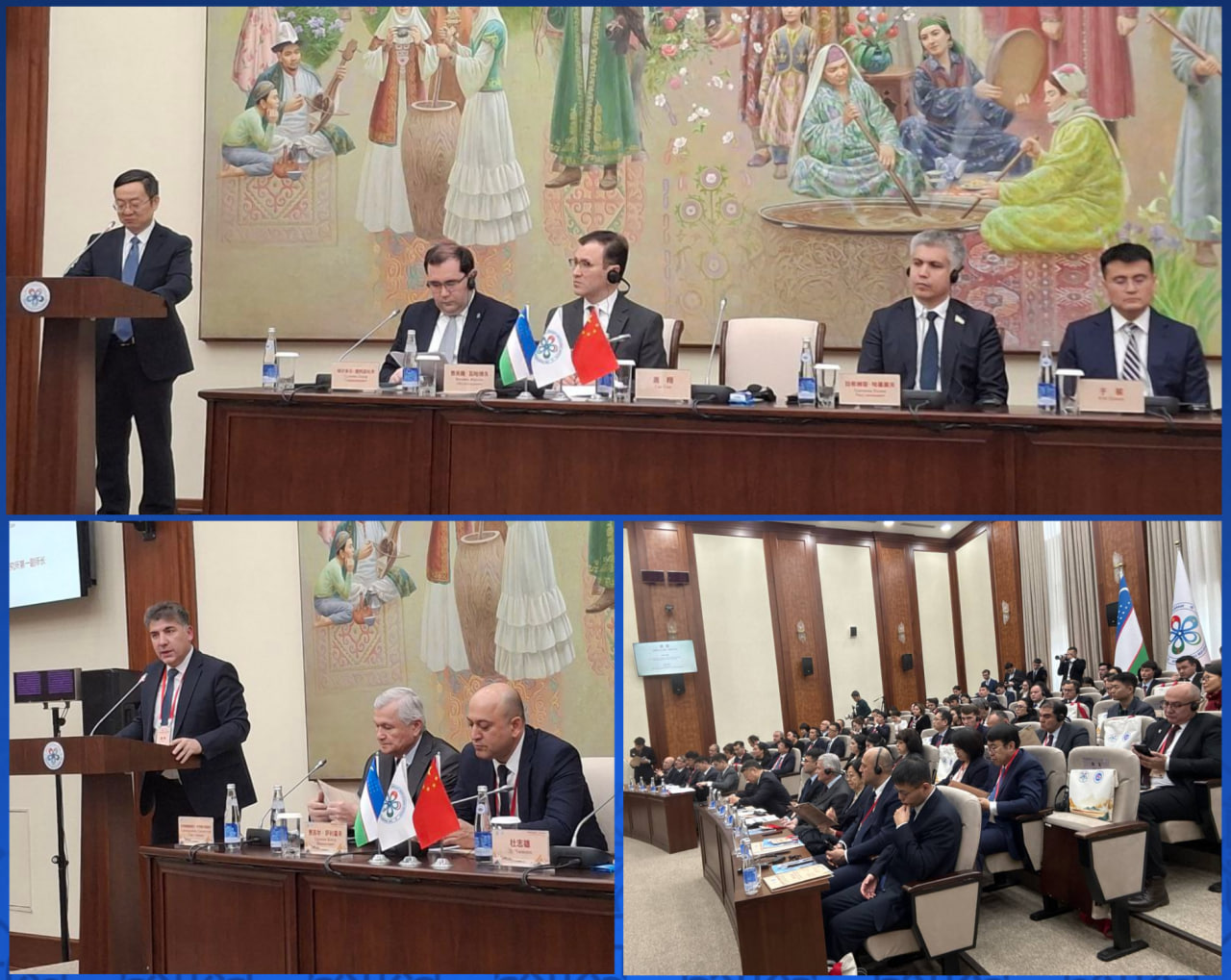
On January 29 of this year, an Uzbek-Chinese scientific symposium on the topic: “Global Transformation and Public Administration” was held in Tashkent, organized by the International Institute of Central Asia and the Chinese Academy of Social Sciences (CASS).
The event brought together a representative group of participants, including leaders and experts from academic, analytical, and research institutions in Uzbekistan and China.
The Chinese delegation was represented by the leadership and distinguished experts from key research institutes of the Chinese Academy of Social Sciences (CASS), including the Institute of World Economics and Politics, the Rural Development Institute, the Institute of Russian, Eastern European and Central Asian Studies, the Institute of Applied Economics of the University of the CASS, the Institute of Quantitative and Technical Economics, the Institute of China Borderland Studies, among others.
The symposium was devoted to a comprehensive analysis of the “all-weather” strategic partnership between Uzbekistan and China in an era of global change. Across four sessions, participants focused their discussions on exchanging experience in public administration, fostering the development of a high-technology economy and “new quality productive forces,” expanding cooperation under the Digital Silk Road initiative, strengthening regional interaction, and aligning the development strategies of both countries.
Addressing the first session of the symposium, Akramjon Nematov, First Deputy Director of the Institute for Strategic and Regional Studies under the President of the Republic of Uzbekistan (ISRS), emphasized that cooperation in public administration and the adoption of effective methodologies represent an important area of collaboration for both countries.
The expert stressed that the contemporary international environment is characterized by deep-seated transformation. Geopolitical contradictions are intensifying, confrontational approaches increasingly dominate international relations, and economic interdependence is being used as a tool of political leverage. Protectionism and restrictions in trade, investment, finance, and technology are gradually becoming entrenched practices.
Further pressure arises from structural global challenges associated with climate change, tightening environmental standards, digitalization, robotization, and the accelerated development of artificial intelligence.
As emphasized by an ISRS representative, for developing economies — Uzbekistan among them — these trends generate a broad range of systemic risks linked to landlocked geography, population growth, technological constraints, and climate stress. This, in turn, objectively calls for the adoption of a long-term, evidence-based, and institutionally coherent state policy.
The ISRS expert also stressed that Uzbekistan’s leadership clearly understands the depth and scale of global change and has put in place a comprehensive development strategy that is already producing concrete outcomes. By the end of 2025, the country’s economic output exceeded USD 140 billion for the first time; foreign investment inflows reached nearly one-third of GDP; external trade grew by about 25 percent; and international reserves surpassed USD 60 billion. Unemployment fell to 5 percent, and more than 1.5 million people were lifted out of poverty.
In his recent Address to the Oliy Majlis and the people of Uzbekistan, President Shavkat Mirziyoyev underscored that the country should go beyond simple adaptation to global change and instead shape its own development model, drawing on internal resources while making effective use of international opportunities.
From this perspective, an ISRS representative noted that the experience of the People’s Republic of China is of particular relevance for Uzbekistan, given that China is not only a neighboring state and strategic partner, but also a compelling example of successful public administration, technological development, and long-term strategic governance.
He underscored that the outcomes of the Fourth Plenary Session of the 20th Central Committee of the Communist Party of China demonstrate that China’s priorities within the framework of its 15th Five-Year Plan largely resonate with Uzbekistan’s national development goals. As key points of strategic convergence, the expert pointed to the shift toward high-quality development, an emphasis on scientific and technological self-sufficiency and innovation sovereignty, the advancement of sustainable social development, and the strengthening of national security.
In his view, the alignment of strategic priorities allows Uzbekistan to more effectively reduce external vulnerabilities, speed up technology transfer, and integrate more confidently into new regional and global economic configurations.
Drawing on Uzbekistan’s national development priorities and an assessment of China’s successful policy practices, Akramjon Nematov identified several key areas where China’s experience holds the greatest practical value.
First, the deepening of industrial and technological cooperation. According to him, for Uzbekistan it is critically important to move from raw-material exports toward the formation of production chains with high value added. In this regard, the establishment of joint research and development (R&D) centers, the transfer of managerial expertise, and the development of advanced processing of industrial and agricultural products are expected to gain particular significance in the medium to long term.
Second, the development of transport and logistics connectivity. In Akramjon Nematov’s view, overcoming the country’s geographic landlockedness critically depends on the expansion of multimodal corridors, the modernization of transport infrastructure, and the introduction of “smart” logistics solutions.
Third, comprehensive digitalization of public administration and the economy. According to the expert, cooperation with Chinese technology companies makes it possible to move beyond fragmented solutions toward the systemic development of a digital state, including the use of Big Data and artificial intelligence in public administration.
Fourth, the “green” transformation of the economy. In particular, it was noted that joint projects in renewable energy, energy storage systems, water conservation, and environmental technologies lay the foundation for sustainable development and the decarbonization of industry.
Fifth, the development of human capital. The ISRS representative believes that expanding the network of joint educational programs, professional training workshops, and research centers contributes to the formation of a skilled workforce that meets the demands of the new technological era.
In conclusion, Akramjon Nematov emphasized that at the present stage the key objective is to move from a focus on scale and volume toward enhancing the quality and substance of cooperation, ensuring that it delivers sustainable socio-economic returns and contributes to strengthening mutual trust. By pooling their efforts, Uzbekistan and China can build a long-term architecture of an “all-weather” comprehensive strategic partnership capable of effectively responding to the challenges of global transformation.
Previous

The First Deputy Director of the Institute for Strategic and Regional Studies under the President of the Republic of Uzbekistan Akramjon Nematov shared this assessment, commenting on the results of President of the Republic of Uzbekistan Shavkat Mirziyoyev's visit to Turkiye.
30.01.2026


