
Experts from Central Asian countries and Azerbaijan discussed security cooperation
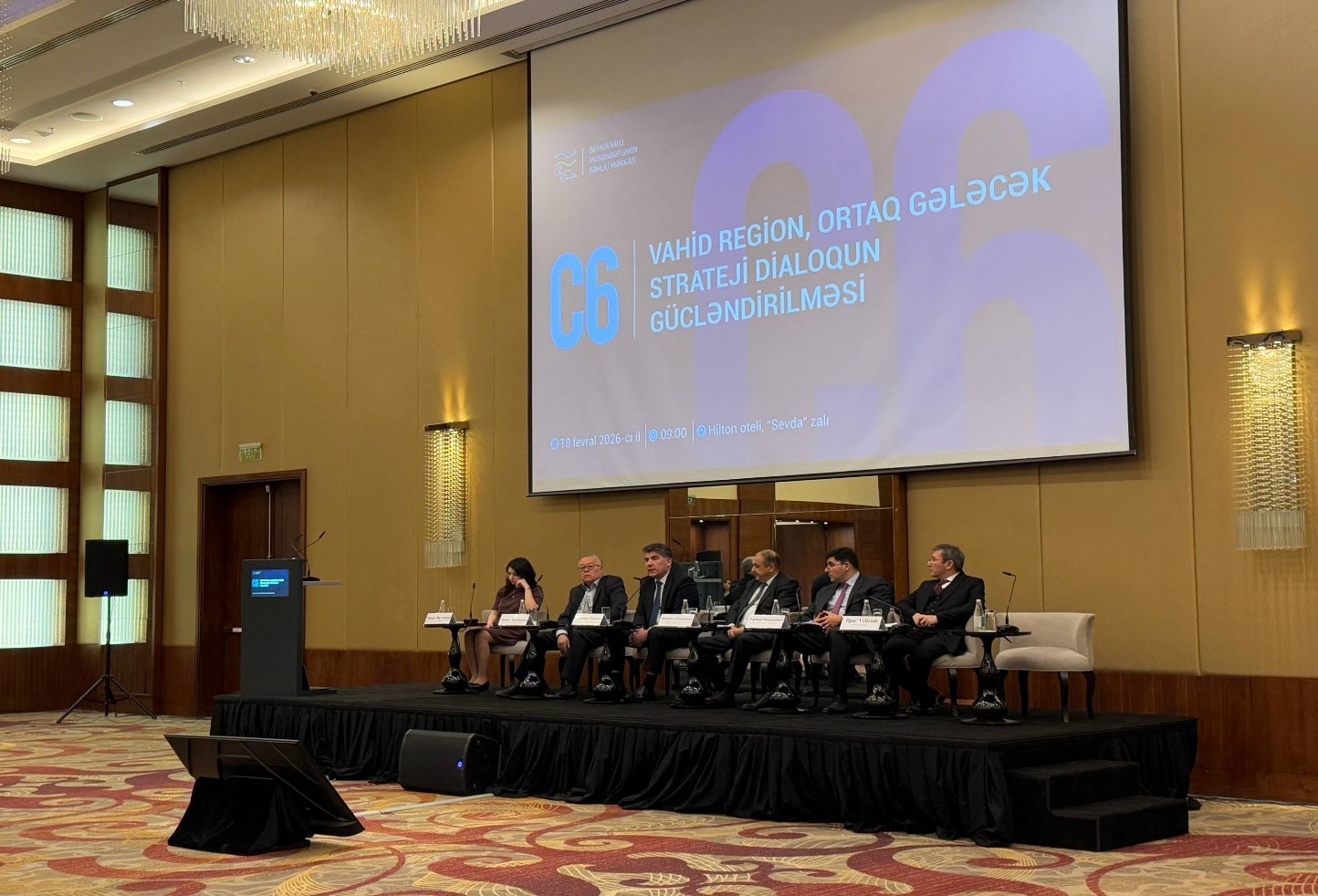
The international conference "C6: One Region, Shared Future – Enhancing Strategic Dialogue" was held in Baku, the capital of Azerbaijan, organized by the Center for Analysis of International Relations of Azerbaijan.
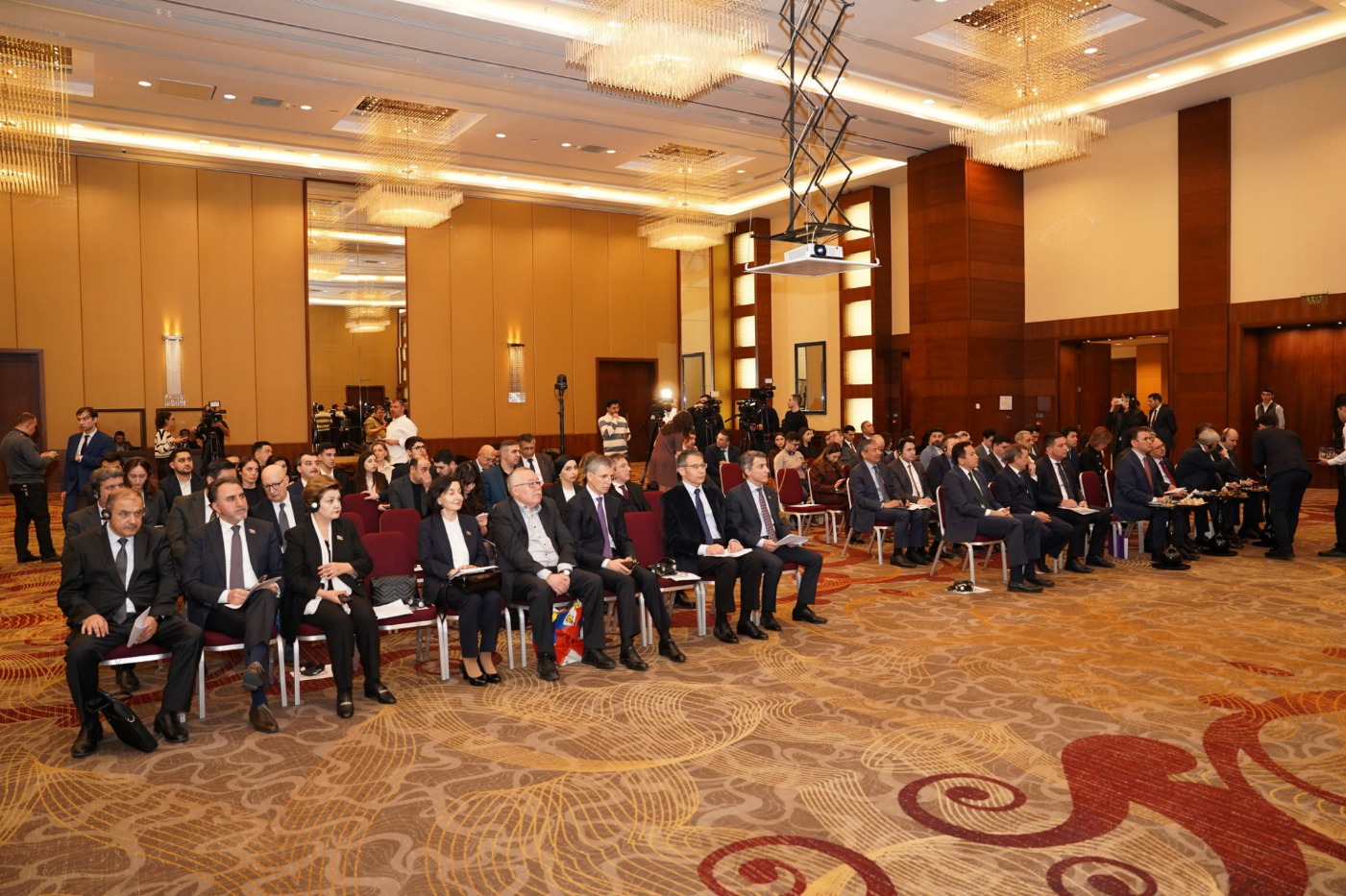
The event was attended by heads and experts from think tanks, research institutions, and government agencies from Kazakhstan, Kyrgyzstan, Tajikistan, Turkmenistan, Uzbekistan and Azerbaijan, as well as representatives of civil society and the media.
Uzbekistan was represented by a delegation from the Institute for Strategic and Regional Studies under the President of the Republic of Uzbekistan (ISRS) and the International Institute of Central Asia (IICA).
Conference participants discussed key areas for strengthening regional cooperation, including the institutionalization of the C6 format, economic connectivity, sustainable development, and security issues in the context of global change.
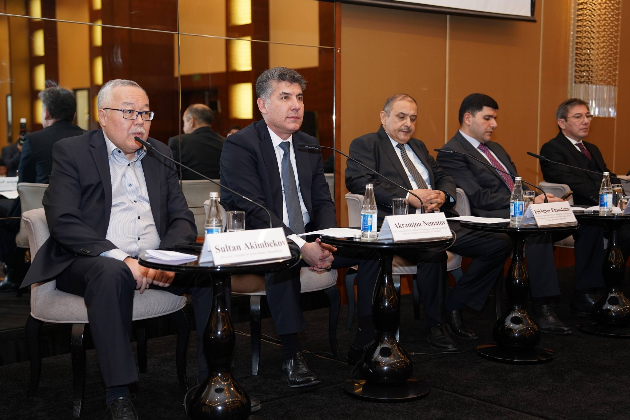
Speaking at a session on security issues, Akramjon Nematov, First Deputy Director of the ISRS, noted that the modern international system is undergoing a profound transformation. "The strengthening of confrontational logic, growing rivalry between centers of power, and increasing uncertainty are shaping a new reality that will determine the long-term structure of the global landscape," he emphasized. It was noted that the traditional understanding of security is no longer limited to military-political aspects: it includes socioeconomic stability, environmental and climatic factors, and technological and information threats.
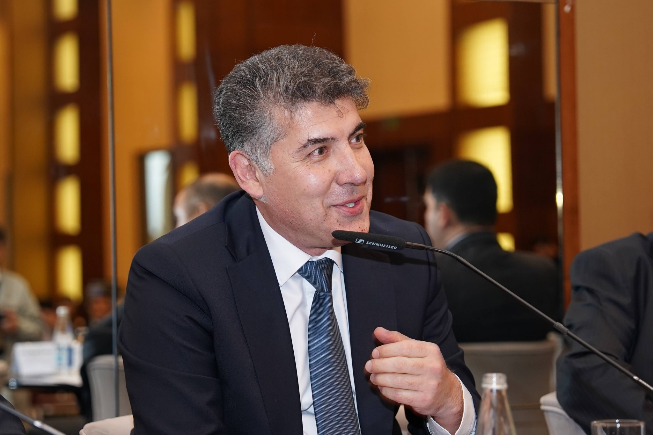
The expert emphasized that in a dynamic, unpredictable external environment, and the declining effectiveness of global mechanisms, regional approaches and joint response mechanisms are becoming key resources for resilience. "Central Asia is demonstrating a new stage of development, characterized by collective responsibility for common security. The geographic, cultural, and historical proximity of states allows for the development of flexible models that take into account national interests and the specific nature of threats," noted Akramjon Nematov.
Particular attention was paid to the principles of flexible institutionalization, which underpin the C6 format. According to the expert, the region deliberately avoids the creation of supranational bodies or the transfer of sovereign powers, preferring interstate consensus.
He stated that this approach ensures strategic autonomy, openness, and pragmatism in interactions, creating a sustainable architecture where decisions are made collectively and based on mutual trust, rather than the logic of a "zero-sum game."
Harmonious interaction with international organizations–the SCO, CSTO, CIS, and the OTS – has become an important part of the regional model. According to the ISRS representative, the emerging system does not distance itself from existing mechanisms; on the contrary, it aims to strengthen them by consolidating a Central Asian approach. The region is creating additional coordination tools based on its own interests and the specifics of regional challenges.
This flexibility has enabled the development of a multi-level security coordination system that adapts to the changing external environment. A key driver is the format of the Consultative Meetings of the Heads of State of Central Asia, launched in 2018, which has served as a platform for the creation of mechanisms for an emerging regional security community.
In 2024-2025, meetings of the Secretaries of the Security Councils were held in Almaty and Samarkand. Last year, the first five-party meetings of the heads of intelligence agencies and defense ministers were held in Uzbekistan.
Joint military exercises (Birlik) have already been held twice, and the Regional Forum of Heads of Emergency Situations has been in operation since 2018. Essentially, the region has moved from fragmented contacts to systemic intraregional coordination without the mediation of external centers of power.
Akramjon Nematov devoted special attention to two key documents adopted at the 7th Consultative Meeting in Tashkent: The Concept of Regional Security, Stability, and Sustainable Development and the Catalog of Security Risks in Central Asia and Measures to Prevent Them until 2028.
"The significance of the Regional Security Concept is difficult to overestimate," emphasized the First Deputy Director of the ISRS. "For the first time, the countries of Central Asia have independently formulated a common understanding of the nature of threats and mechanisms for overcoming them. This is an important step toward institutionalizing regional agency. The region is no longer an object of external strategies, but a collective actor shaping its own security agenda."
The key provision of the document, according to the expert, was the enshrinement of the principles of indivisible security and shared and mutual responsibility. "This approach eliminates confrontational logic and directs states toward strengthening trust, good-neighborliness, and mutually beneficial cooperation," he emphasized.
Particular attention, he said, is given to institutionalizing a multidimensional understanding of security. Economic stability, transport connectivity, water and energy balance, technological modernization, and humanitarian contacts are viewed as integral elements of the overall security framework. "Particular emphasis is placed on prevention and early threat detection, on neutralizing risks before they become acute," noted Akramjon Nematov.
It was emphasized that the Concept does not exist in isolation, but rather organically complements the Central Asia Development Strategy to 2040, adopted in 2024 in Astana. "These documents reinforce each other: The Concept provides the institutional and political conditions for the secure and sustainable implementation of the Strategy," noted the First Deputy Director.
The Catalogue of Security Risks in Central Asia and Measures to Prevent Them by 2028 is a logical continuation of the Concept. "Unlike the Concept, which sets principles and guidelines, the Catalogue is practical in nature," the expert noted.
It systematizes the main threats – from terrorism and radicalization to drug threats, cybercrime, climate, and man-made risks – and identifies specific areas for coordination, information exchange, joint programs, and preventative measures.
All of this, as the speaker noted, demonstrates the formation of a self-sufficient regional coordination framework based on the political will of the states themselves. "While previously interaction was carried out primarily through external multilateral structures or limited to bilateral formats, today a sustainable and institutionalized model of cooperative security is being developed," emphasized the First Deputy Director of the ISRS.
The expert noted that Central Asia is gradually acquiring the characteristics of a soft, non-aligned security community based on trust, a culture of compromise, and recognition of mutual responsibility. This fosters an internal mechanism of collective resilience and allows the region to maneuver flexibly in a complex external environment. At the same time, the region remains open to international cooperation, and new interaction architectures do not compete with existing mechanisms, but rather strengthen them, fostering a common understanding of threats and increasing the effectiveness of participation in global formats.
"In a context of high instability and a return to power politics, Central Asia and Azerbaijan have a historic opportunity to build a model of interaction that transcends the logic of great power confrontation and reflects the interests of small and medium-sized states. By combining efforts and enhancing the competitiveness of the common space, it is important for our countries to integrate into global value chains, which are currently undergoing a profound reconfiguration," the expert noted.
Akramjon Nematov emphasized the fundamental importance of preserving the macro-region as a space for cooperation, not competition. "We must jointly initiate dialogue, create platforms for aligning interests, and develop an architecture of interaction where decisions are made with a balance among all participants. A commitment to multilateralism and international law, which ensure a predictable and stable external environment, remains an essential condition for sustainability," the expert added.
According to him, the Central Asia-Azerbaijan format could potentially become an example of a new type of cooperative security based on preventive action, the integration of economic, technological, and humanitarian resources, and the principle of collective responsibility. "As such, the countries of the region are capable of acting as a stabilizing factor in the broader international context, consistently promoting strategic autonomy, strengthening the region's position as an independent actor, and demonstrating that medium-sized states are capable of establishing their own rules of engagement and contributing to the development of a sustainable global architecture," the expert concluded.
Previous

On 14-15 February of this year, during the 62nd Munich Security Conference in Munich, Germany, Central Asia was represented for the first time in the history of this forum as an integrated region with its own model of peaceful transformation, sustainable development, and regional responsibility. This perspective was presented in discussions held at events organized by the Nizami Ganjavi International Center (Azerbaijan) and the Caspian Policy Center (United States).
16.02.2026


