
Mutually Beneficial Water-Energy Cooperation Models Discussed in Tashkent

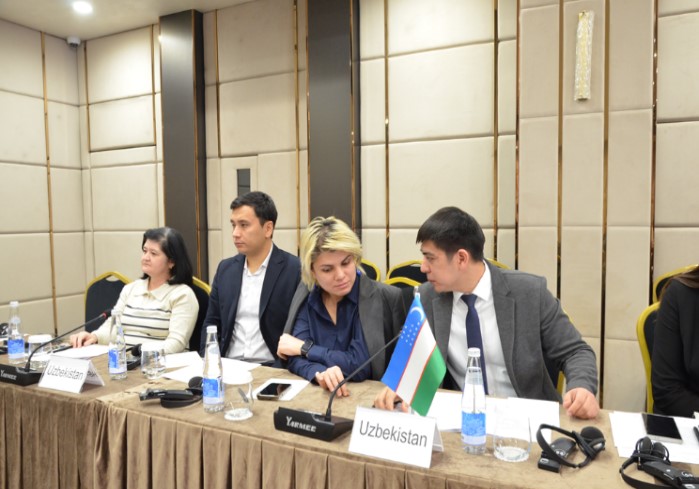
Recently, the fifth meeting of the Regional Working Group on Mutually Beneficial Water-Energy Cooperation was held in Tashkent under the “Green Central Asia, Phase II” programme of the Deutsche Gesellschaft für Internationale Zusammenarbeit (GIZ) GmbH, Germany’s international development agency.
The event brought together representatives of relevant ministries, research institutes, and analytical centres from Central Asian countries, as well as international organisations and development partners.
Participants exchanged views on the prospects for applying modern analytical models in the sphere of water-energy cooperation. Experts from the World Bank, the Scientific-Information Centre of the Interstate Coordination Water Commission (SIC ICWC), the University of Potsdam, GIZ programmes, and the United Nations Economic Commission for Europe (UNECE) presented tools used to assess water and energy resources and to build development scenarios for the sector.
The meeting was attended by Lobar Umarova, Chief Research Fellow at the Institute for Strategic and Regional Studies under the President of the Republic of Uzbekistan (ISRS). She shared expert views on key prospects for Uzbekistan’s cooperation with neighbouring countries and international partners in managing water-energy resources in Central Asia.
The discussions included an exchange of views on the application of various regional models that capture the interlinkages between water and energy systems, as well as agriculture and the environment. In this context, the Uzbek side put forward several proposals aimed at strengthening regional water cooperation.
In particular, the importance of widely applying advanced hydrological models to optimise irrigation schedules, environmental water releases, and assessments of drinking-water needs was emphasised. This would improve water-use efficiency and ensure coordinated interaction among countries, especially during periods of peak summer demand.
Special attention was also given to the use of specialised models for studying groundwater resources. These are necessary for accurately assessing the condition of aquifers and determining safe limits for water abstraction. A comprehensive approach to groundwater management and preventing soil salinisation in risk areas is a strategic priority for safeguarding food security and preserving land resources.
Participants showed considerable interest in the proposal to develop long-term climate scenarios up to 2050 and beyond, which would enable timely adaptation of hydraulic infrastructure and increase resilience to droughts and floods. The Uzbek side stressed that scientific data must form the foundation of coordinated intergovernmental decision-making.
Particular attention was drawn to the idea of creating and implementing a “Needs → Models → Results” matrix, designed to link scientific approaches with real decision-making processes at the interstate level. This approach is viewed as a key condition for sustainable development in Central Asia, requiring coordinated action based on trust and a balance of interests.
The event was organised by the Deutsche Gesellschaft für Internationale Zusammenarbeit (GIZ) GmbH, Germany’s international development agency, under the Green Central Asia, Phase II programme, in cooperation with the Organisation for Economic Co-operation and Development (OECD), the Scientific-Information Centre of the Interstate Coordination Water Commission (SIC ICWC), and the International Climate Initiative (IKI).
Previous

On 11 December 2025, Director of the Institute for Strategic and Regional Studies under the President of the Republic of Uzbekistan (ISRS) Eldor Aripov held an online meeting with Rene Van Acker, President of the University of Guelph, Shayan Sharif, Vice President (Academic), and Bill Rosehart, Provost and Vice President (Finance).
11.12.2025


