Presentation of the Book “Uzbekistan: The Third Renaissance – A Concept for the Future” Held in Tashkent
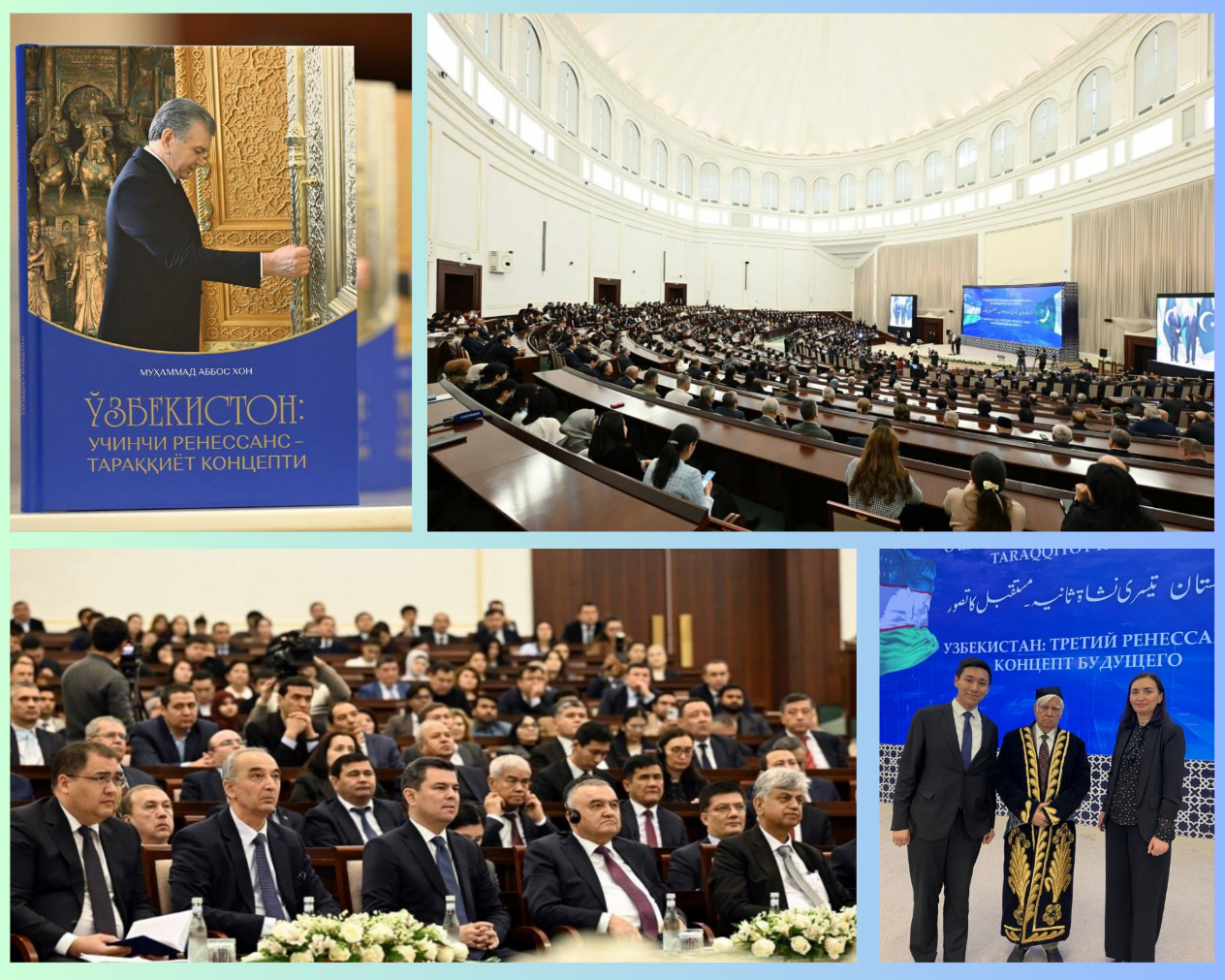
Recently, a presentation of the book “Uzbekistan: The Third Renaissance – A Concept for the Future” by Pakistani journalist and writer Muhammad Abbas Khan was held in Tashkent at the Alisher Navoi National Library.
Muhammad Abbas Khan is the author of numerous literary and philosophical works. During his tenure as a special correspondent for the Pakistani newspapers Daily Ittehad and Pakistan Economic, he published articles on the socio-political and cultural life, as well as the history of Uzbekistan and other countries of Central Asia.
The book, published this year in Urdu and translated into Uzbek and Russian, provides a detailed account of the large-scale reforms and the progressive development model of New Uzbekistan under the leadership of President Shavkat Mirziyoyev.
In his work, Muhammad Abbas Khan presents the concept of the Third Renaissance as both a philosophical and practical foundation for the country’s transformation, rooted in values traditionally inherent to the region, including justice, humanism, and enlightenment.
The presentation brought together representatives of the legislative and executive branches, government bodies, expert circles — including the Institute for Strategic and Regional Studies (ISRS) — as well as the media and the diplomatic corps. Among the guests was a delegation of the Islamic Republic of Pakistan, headed by Murtaza Solangi, Adviser to the President of Pakistan on Information.
In his remarks, the author noted that “the transformations being carried out under the leadership of President Shavkat Mirziyoyev inspired me to write this book. Uzbekistan is demonstrating to the world a successful example of implementing large-scale reforms aimed at building a modern and dynamically developing state.”
The foreword to the book was written by Prime Minister of Pakistan Shehbaz Sharif, who expressed deep respect for the rich spiritual heritage of the Uzbek people and highly praised the pace of positive change in the country. According to him, the publication plays an important role in strengthening mutual understanding between nations and serves as a valuable reference for future generations.
Speakers at the presentation unanimously noted that the book reflects the growing international interest in the reforms being implemented in Uzbekistan, which are increasingly referred to as the “Uzbek miracle.” They emphasised that the achievements attained have become possible thanks to the country’s focused and consistent policy aimed at strengthening its role in the global community.
During the event, special attention was also paid to the strategic partnership between the two countries. Pakistani guests highly praised the initiatives of the Presidents of Uzbekistan and Pakistan aimed at enhancing connectivity and developing transport and logistics corridors linking Central and South Asia. These projects revive key routes of the Great Silk Road and open up new opportunities for economic growth, trade, and sustainable regional development.
In conclusion, participants expressed satisfaction that Uzbekistan’s experience — rapid state development, institutional modernisation, and a strong focus on an innovative future — is attracting increasing international interest. It was particularly emphasised that such research-based works contribute to a deeper understanding of the ideas of the Third Renaissance and the positive transformations underway in New Uzbekistan.
Next

On 11 December 2025, Lobar Umarova, Senior Research Fellow at the Institute for Strategic and Regional Studies under the President of the Republic of Uzbekistan (ISRS), participated in an international expert meeting dedicated to the development of water cooperation in the Middle East, held in Istanbul.
15.12.2025


